The main points
- Not advice. Sneakers and jeans are named as unsuitable on the booking.
- You walk warm, then stand still in cold air for an hour.
- The plateau is exposed and the wind does most of the damage.
- Helmet and harness are issued at the cabin.
Why boots, specifically
The booking page names hiking shoes as a requirement and names sneakers and jeans as not suitable. That is unusually direct language for a tour listing, and it is worth understanding rather than resenting.
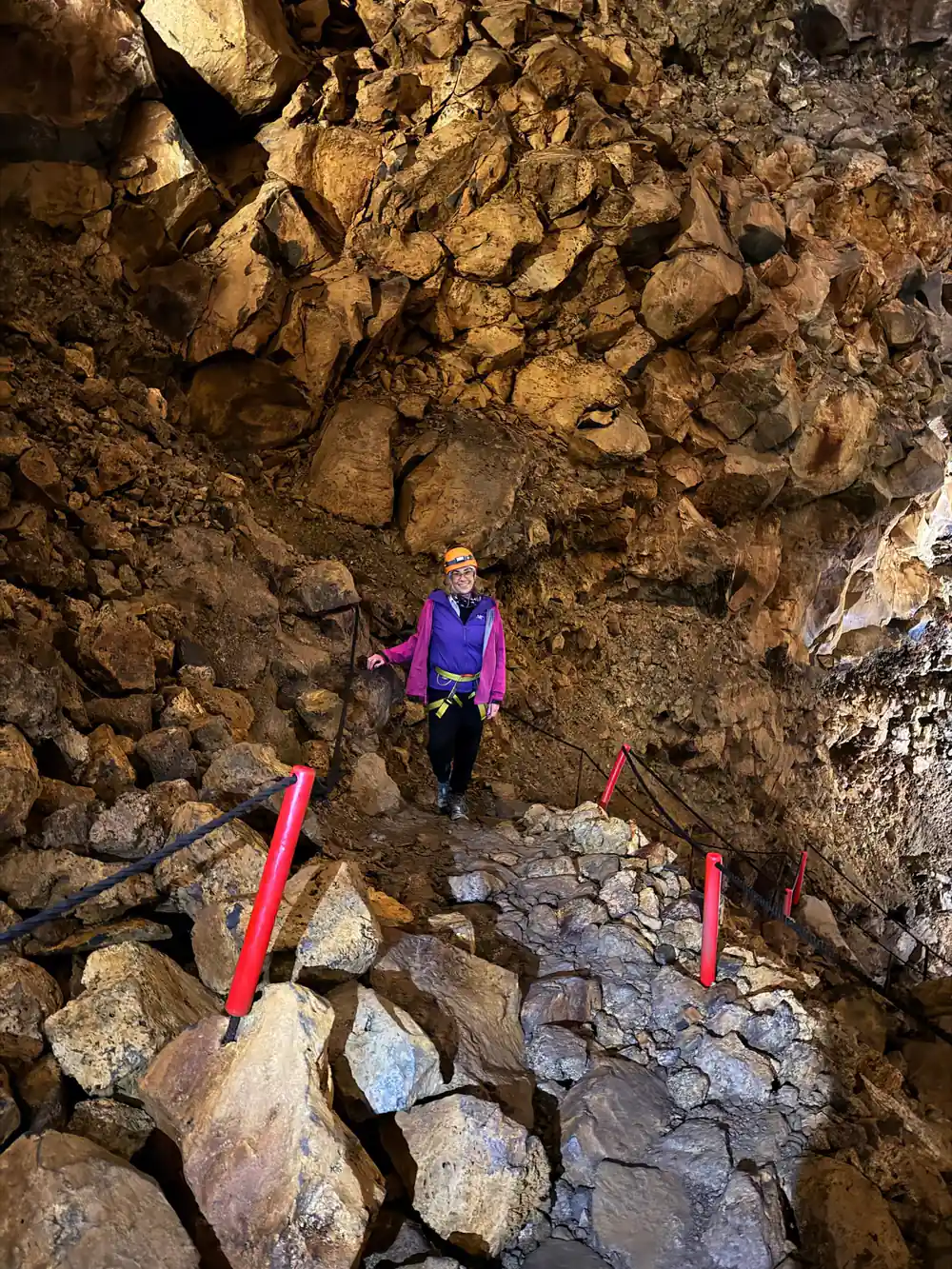
The ground is a four-thousand-year-old lava flow. Underneath the moss it is a jumble of blocks with gaps, holes and small collapses between them, and the moss makes it look flat while changing none of that. You cannot see where you are putting your foot, and every step is slightly different from the one before.
A flexible sole folds into those gaps. An unsupported ankle rolls when a block shifts. Neither is dangerous at walking pace with attention, and both are extremely tiring across ninety minutes, which is why every visitor who shrugs the walk off turns out, when asked, to have had proper boots on.
The jeans instruction is about a different failure. Denim is heavy, it holds water, it does not dry, and it is miserable in wind. In a place where a shower can arrive without much notice, it is the wrong material rather than merely an unfashionable one.
Layers, because the day contradicts itself
This is a day with two opposite requirements and no way to split the difference with a single garment.
The walk generates heat. Ninety minutes of steady effort with a pack, even in cool air, and most people arrive at the crater warmer than they started and shedding something.
Then everything reverses. You stand at an exposed rim waiting for a winch, for an indeterminate period, in whatever the plateau is doing. Then you stand still on a rubble slope in a chamber that has been cold for millennia. Neither involves any movement at all.
The answer is layers you can put on and take off without stopping the group: a base layer, a warm mid layer, and a windproof shell. What you must not do is dress perfectly for the walk and then have nothing left for the two hours of standing still.
The wind, which is the real variable
Icelandic temperatures are mild for the latitude and the wind is not. On an exposed plateau a modest air temperature with a strong wind is far more punishing than a lower reading in still air, and the plateau is almost never still.
So a windproof outer layer matters more than a thick one. A thick coat the wind goes straight through is worse than a thin shell worn over a fleece.
A hat that covers the ears and gloves you can actually use are the two accessories people most often leave behind and most often want. Neither takes up any space.
Boots on broken lava under moss
Dressing for a chamber that never warms up
The hour underground deserves its own thought, because it is the part people dress for last and feel most.
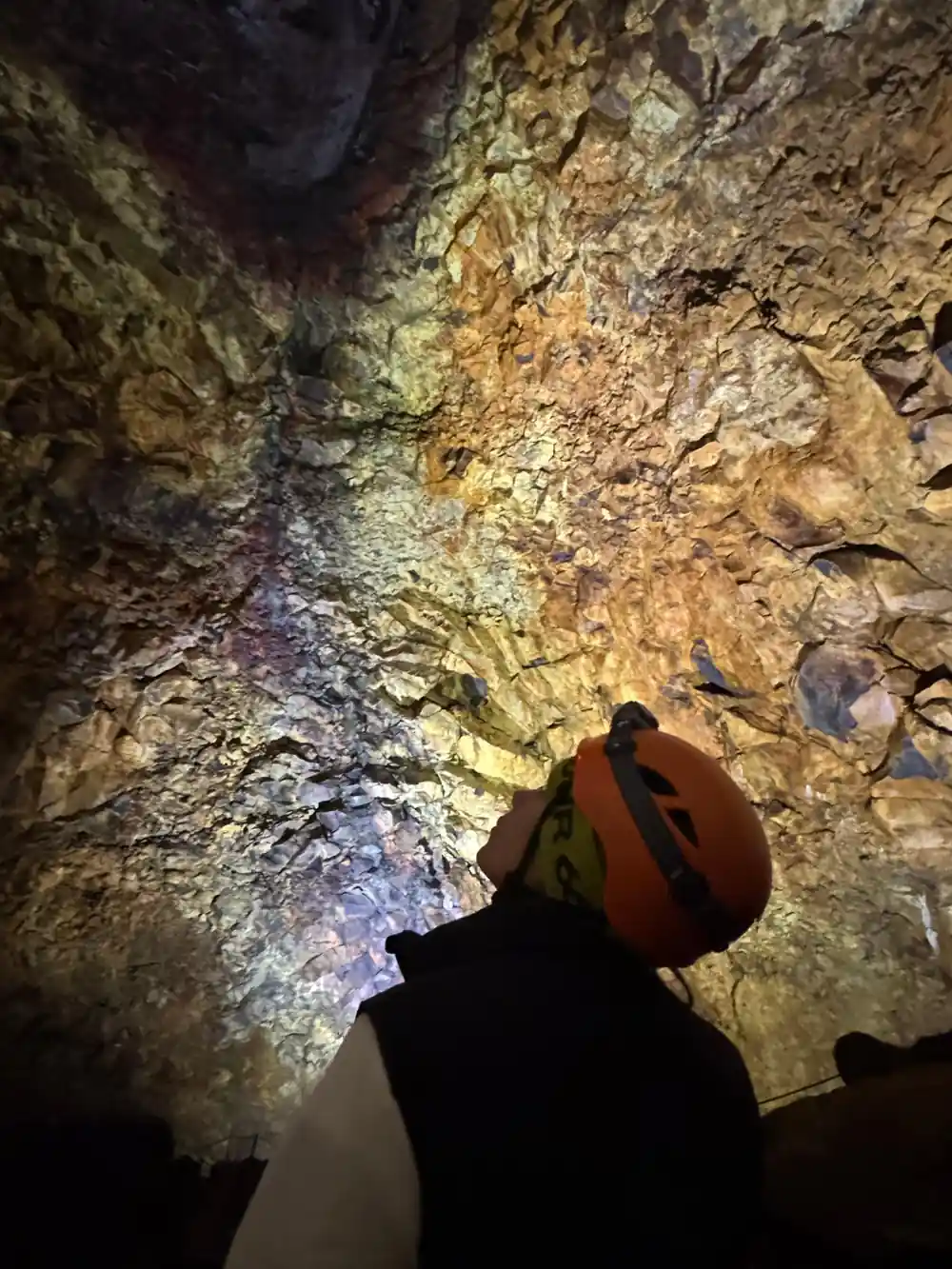
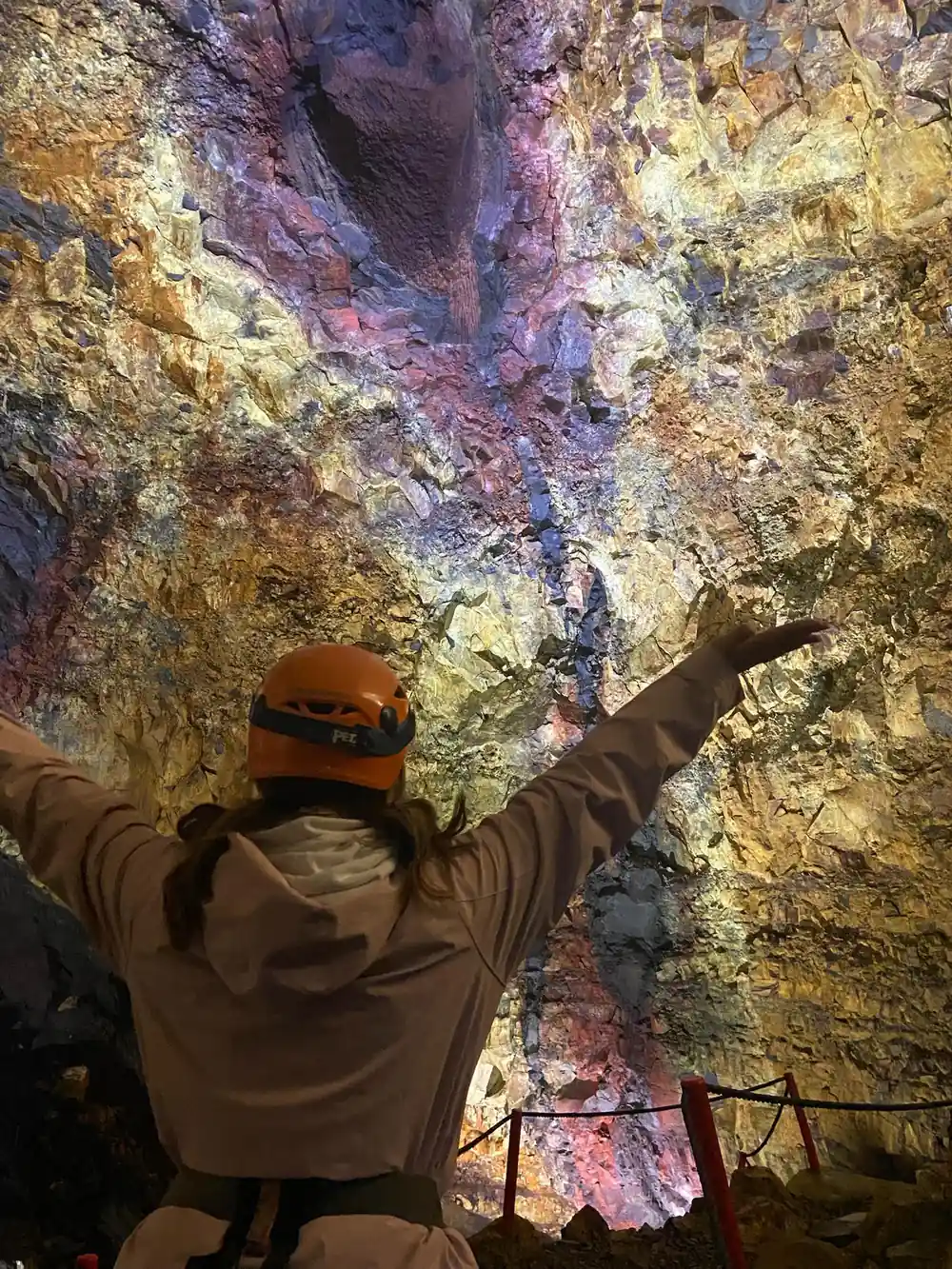
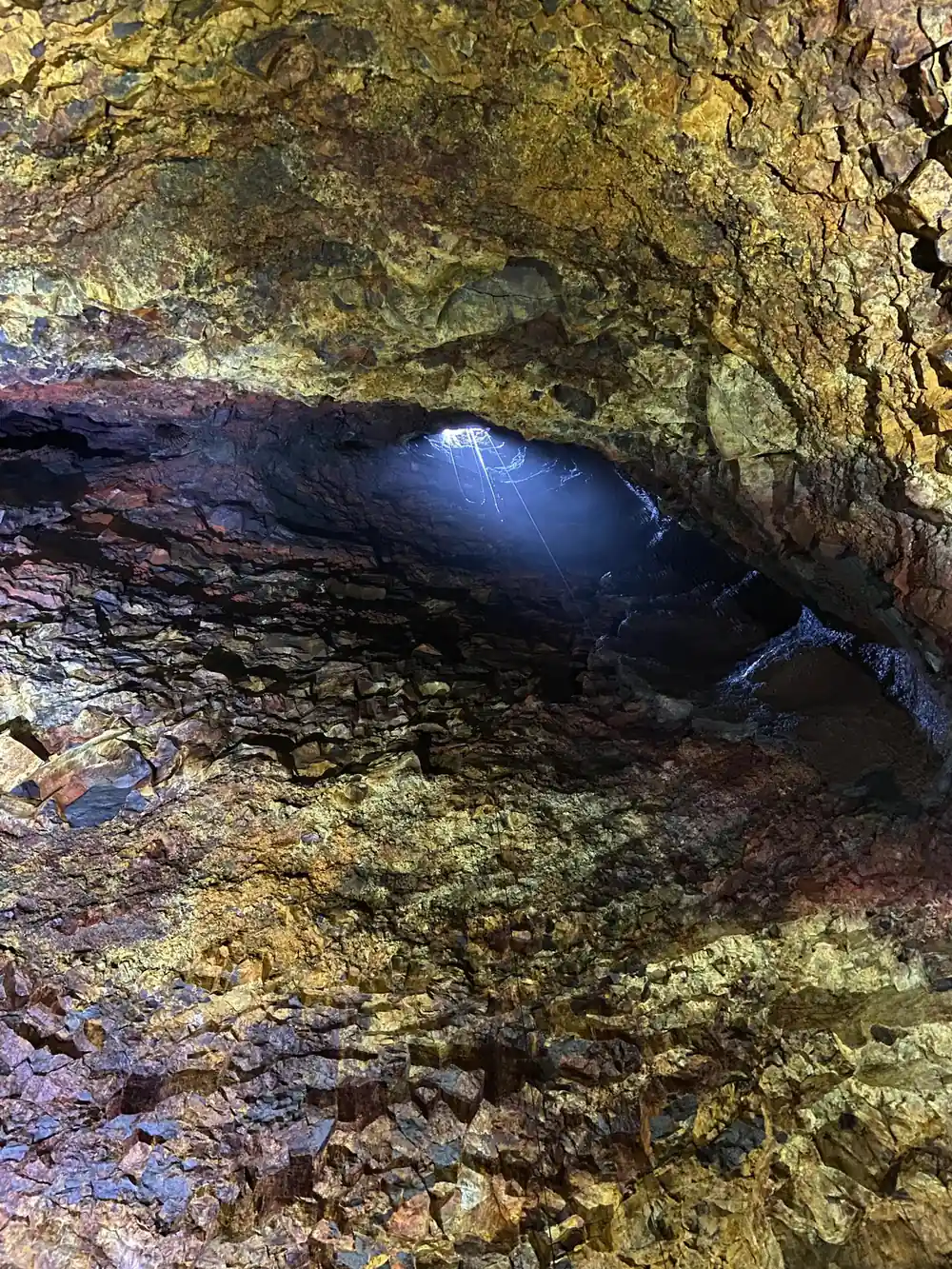
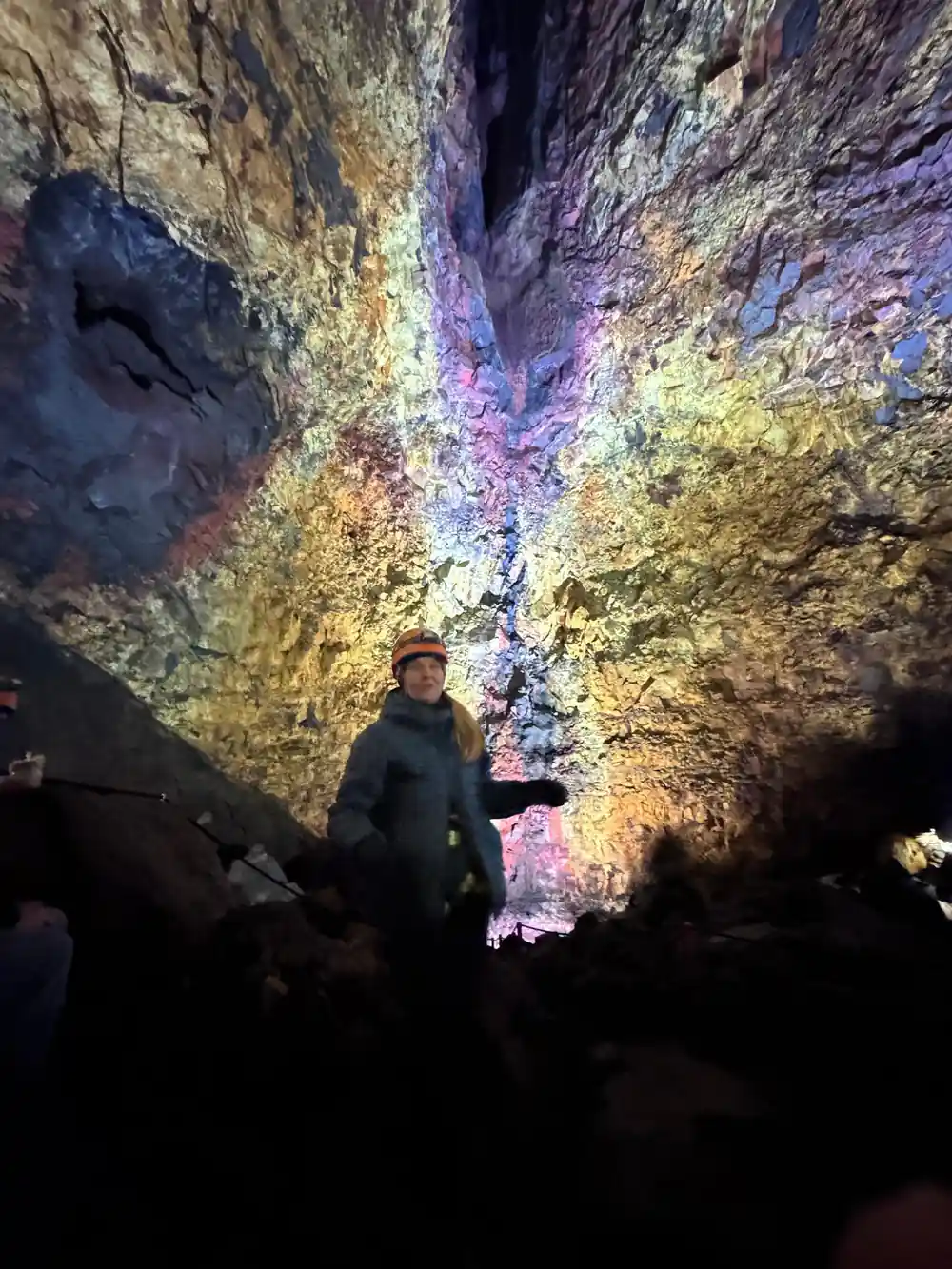
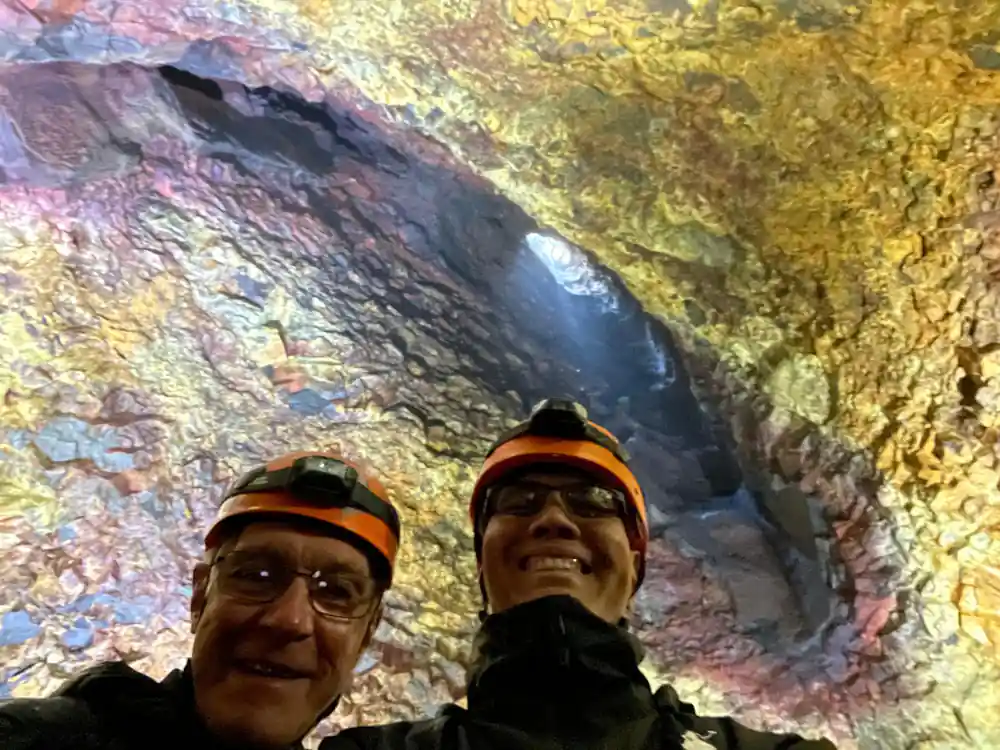
The chamber sits at the temperature of the surrounding rock and has done for four thousand years, which in Iceland is not generous. There is no sun, no wind chill either, and no exertion: you are standing on a slope looking upwards, largely motionless, for up to sixty minutes.
That combination - cold air, no movement, a long time - is exactly the one that gets through clothing which coped perfectly well with the walk. The mistake is to arrive at the crater warm, shed a layer for comfort, and then get on the platform without putting it back.
So the rule is simple and almost nobody follows it: put the extra layer on before you board, not after you notice. Once you are on the floor of a magma chamber, whatever you are wearing is what you have.
What is provided
The hut issues you a helmet and a harness, both covered by the booking. They are fitted indoors before the walk, which is a sensible arrangement, and checked again at the crater.
Nothing else is provided, and nothing else is needed. This is not a trip that requires technical equipment; it requires ordinary hillwalking clothing and the boots.
The harness goes over what you are wearing, so a shell you can fasten is easier to work with than a loose flapping one. It is a small point and it is the difference between a thirty-second adjustment and a two-minute one in wind.
What to bring, and what to leave
Bring water. Forty-five minutes out, an hour underground and forty-five back is longer than people plan for, and the ground between hut and crater holds absolutely nothing.
Bring a small bag rather than a large one. You are carrying it for three kilometres and there is nowhere to put it down inside the chamber.
Bring identification if you are being picked up, and a camera or phone if you want one, with the caveat that a bright screen underground works against you.
Leave everything else at the cabin. Spare clothes, the things you drove up in, anything bulky. There is somewhere to put them and there is no reason to carry them across a lava field.
And use the toilets at the cabin before setting off. There is nothing between there and the crater, and the round trip including the hour underground runs to well over three hours.
Boots, layers, a windproof shell, and water
from US$432Reserve now & pay later