The main points
- Six hours plus driving. Nothing useful survives afterwards.
- So a weather cancellation has another day to move to.
- Both are full days. Neither bolts on to the other.
- Which is where almost everybody is staying anyway.
The day it takes
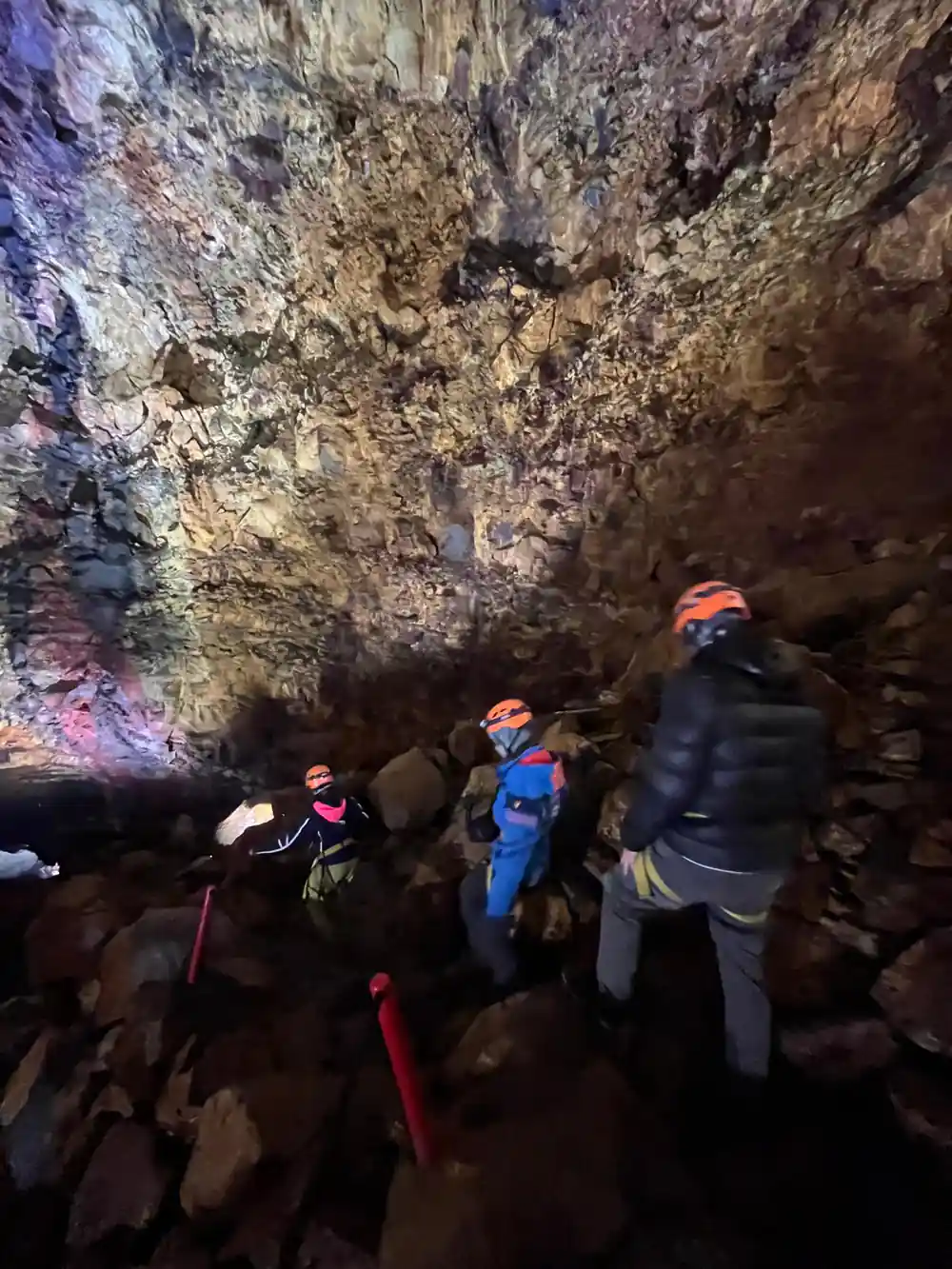
Six hours from the meeting point, plus the drive up and back, plus the getting ready. In practice it occupies a day, and it occupies the useful part of it.
Most people see Iceland in something between three days and a week, which means this is somewhere between a third and a seventh of everything they will do. That is a significant allocation and it deserves a deliberate decision rather than being slotted in.
It is worth saying that people who do it almost universally think it was the right allocation. But the arithmetic should be made in advance rather than discovered.
Which day
An early one, and this is the strongest scheduling advice on the whole site.
The reason is weather. The operation is on an exposed plateau and it can be stopped by conditions there. A booking on day two of a week can move to day four. A booking on day seven cannot move anywhere, and the free cancellation that would have protected you becomes a refund instead of a trip.
Avoid arrival day and departure day. Flight timings, fixed departures, ninety minutes of walking and a plateau with its own weather do not combine well with an airport at either end, and there is no slack anywhere in the arrangement.
What not to pair it with
Not the Golden Circle. That is a full day of driving with three major stops, and this is a full day of walking with one. Attempting both means doing neither properly and being tired for both.
Not the south coast. Same reasoning, more driving.
Not a second excursion in the afternoon. The finish time and the state you are in afterwards make that a bad plan even when the clock technically allows it.
What does pair with it is nothing, and that is the honest answer. Give it the day, eat well that evening, and plan the rest of the week around it.
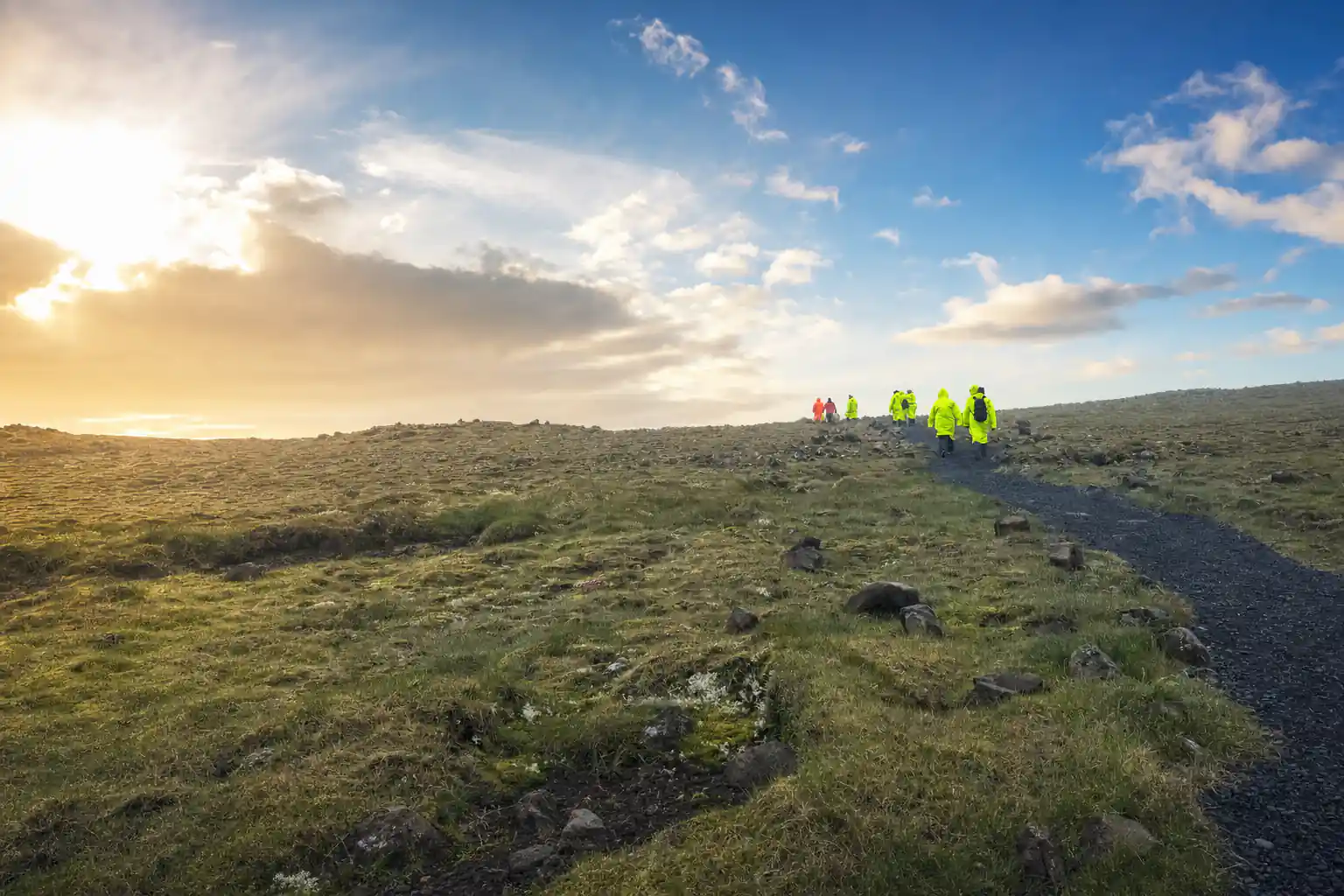
The plateau above the capital
A worked week
It helps to see it placed rather than described. Take a common shape: five days, arriving one afternoon and leaving on the morning of the fifth.
Arrival day is written off for anything with a fixed departure, so it becomes the city: walking about, eating, sleeping off the flight. Day two is this crater, early, because it is the one booking that cannot be repeated and the one most exposed to weather. Day three takes the Golden Circle or the south coast, which are long drives and entirely weather-tolerant. Day four is the flexible one, and if day two was cancelled it is where the crater moves to.
That ordering is not the only workable one, but it has the property that matters: the item with the least flexibility gets the earliest slot and keeps a spare behind it. Reverse it - crater on day four, driving on day two - and a single bad morning on the plateau ends the whole thing.
The general rule is worth extracting from the example. In a country where weather cancels things routinely, order your week by how replaceable each item is, not by how excited you are about it.
What is genuinely nearby
Less than people hope, and it is worth setting expectations rather than pretending otherwise.
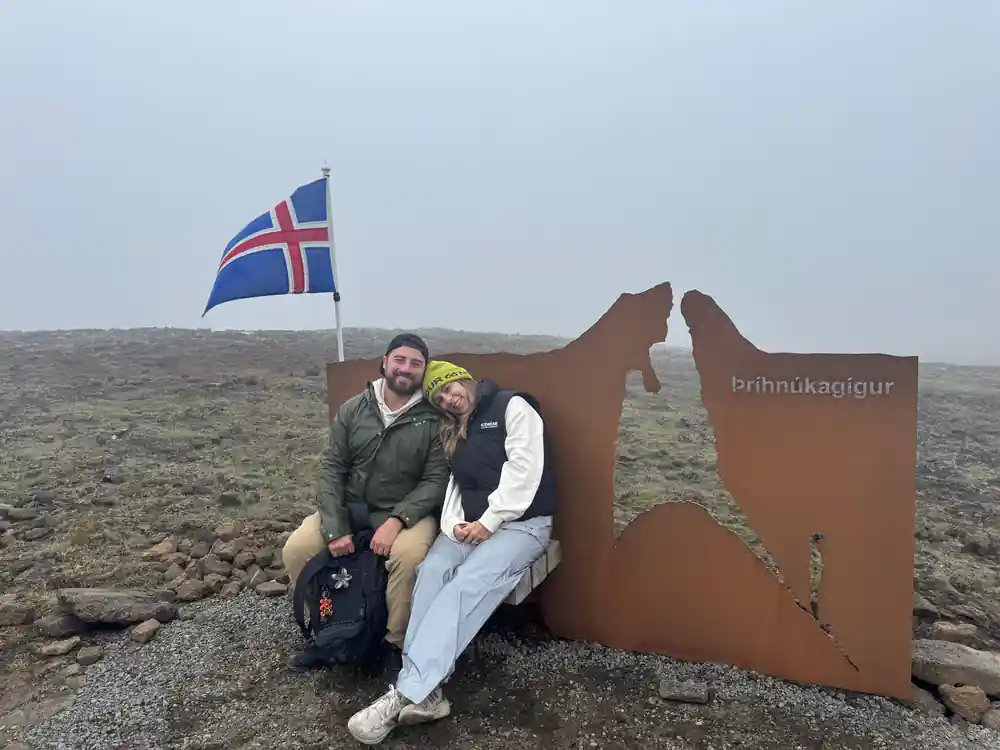
The meeting point is a ski cabin on a lava plateau. There is no village, no cafe beyond the hut, no cluster of other attractions. It is close to Reykjavik in driving time and it is in the middle of nothing.
The Reykjanes peninsula and the road to the airport are broadly in the same direction, which makes a loose geographic logic for some itineraries, but the day itself leaves no room to act on it.
The one genuinely useful adjacency is the capital, which is half an hour away and where you will be sleeping.
Where to stay
Reykjavik, for almost everybody. It is where the flights arrive, where the accommodation is, where the optional pickup collects from, and it is half an hour from the meeting point on paved road.
There is no advantage to staying closer. The plateau has no accommodation and the surrounding area has very little, and the drive is short and easy in any case.
If your itinerary has you elsewhere in the country on the day, the honest answer is to move the booking rather than the drive. From the south coast or the west this stops being a half-hour approach and becomes a substantial journey before a six-hour day.
Cruise stops and short layovers
For a cruise passenger with a day in port, the timings are tight but not impossible, and the deciding factor is the fixed departure schedule rather than the distance. This is not a trip that can be hurried or shortened at either end.
For a stopover between flights, it is a poor bet. Six hours of excursion, a fixed departure, an exposed plateau and an aircraft to catch is a chain with no slack in it, and the weather has a vote.
In both cases the practical advice is the same as everywhere else on this page: if there is no second day available, the free cancellation protects your money and not your trip.
Give it a day, early in the week
from US$432Reserve now & pay later
Answers before you go
How many days do I need in Iceland for this?
Which day should I use?
Can I combine it with the Golden Circle?
Can I do it on an arrival or departure day?
What else is nearby?
Does it work from a cruise stop?
Where should I stay?
What should I plan for the evening?
Placing it in the week
Decide it takes a day
Six hours plus driving. Nothing useful survives the afternoon.
Put it early in the trip
So that a weather cancellation has somewhere to move to.
Not arrival or departure day
Fixed departures and a walk do not combine with an airport.
Do not pair it with a driving day
The Golden Circle and the south coast are full days of their own.
Stay in Reykjavik
Half an hour away, where the pickup collects and the beds are.
Plan the evening lightly
You will be tired, cold and pleased with yourself. Eat nearby.