The main points
- A drained flow channel. Horizontal, walkable, and there are many.
- A seasonal void in moving ice, in a different part of the country.
- The chamber the magma was stored in. There is one you can enter.
- Different geology, different days, different value for a short trip.
Three different things sold with similar words
Iceland markets several underground experiences and the language around them blurs together: cave, tunnel, tube, chamber, inside the earth. They are not variations on one theme, and booking the wrong one because you assumed they were is a real and avoidable disappointment.
Two of them are common and one is not, and the differences are geological rather than a matter of quality. Understanding which is which takes about two minutes and is worth doing before you commit a day.
Lava tubes
A lava tube is a drained flow channel. When a lava flow runs, its surface cools and crusts over while the molten interior keeps moving; when the eruption stops, the still-liquid lava drains out from under the crust and leaves a tunnel behind.
The result is horizontal, roughly pipe-shaped, often long, and entered by walking in or descending a short set of steps. The walls carry drip and flow features and sometimes colour. Iceland has a great many of them, including good ones very close to Reykjavik, and several are set up for visitors.
They are genuinely worth doing and they are a different experience from this crater. A tube is plumbing: a passage that lava travelled through on its way somewhere. It is usually a shorter outing, a far lighter commitment, easier to reach, and with fewer restrictions on who can come.
If your priority is to be underground in volcanic rock without a six-hour day, a lava tube is the sensible answer and nobody should feel short-changed by it.
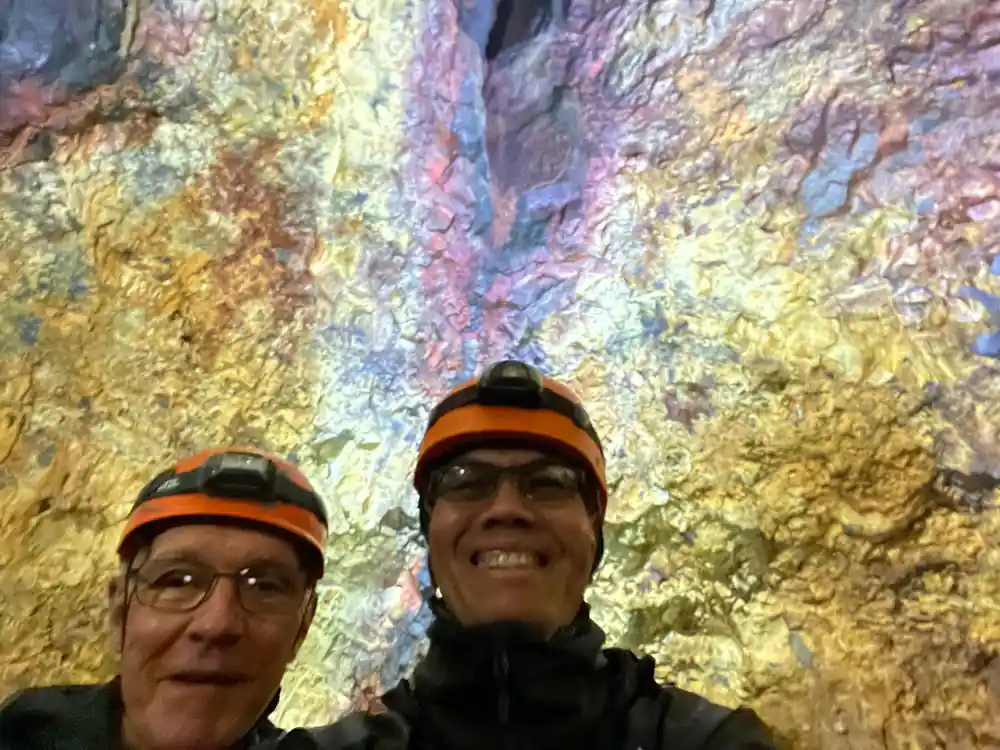
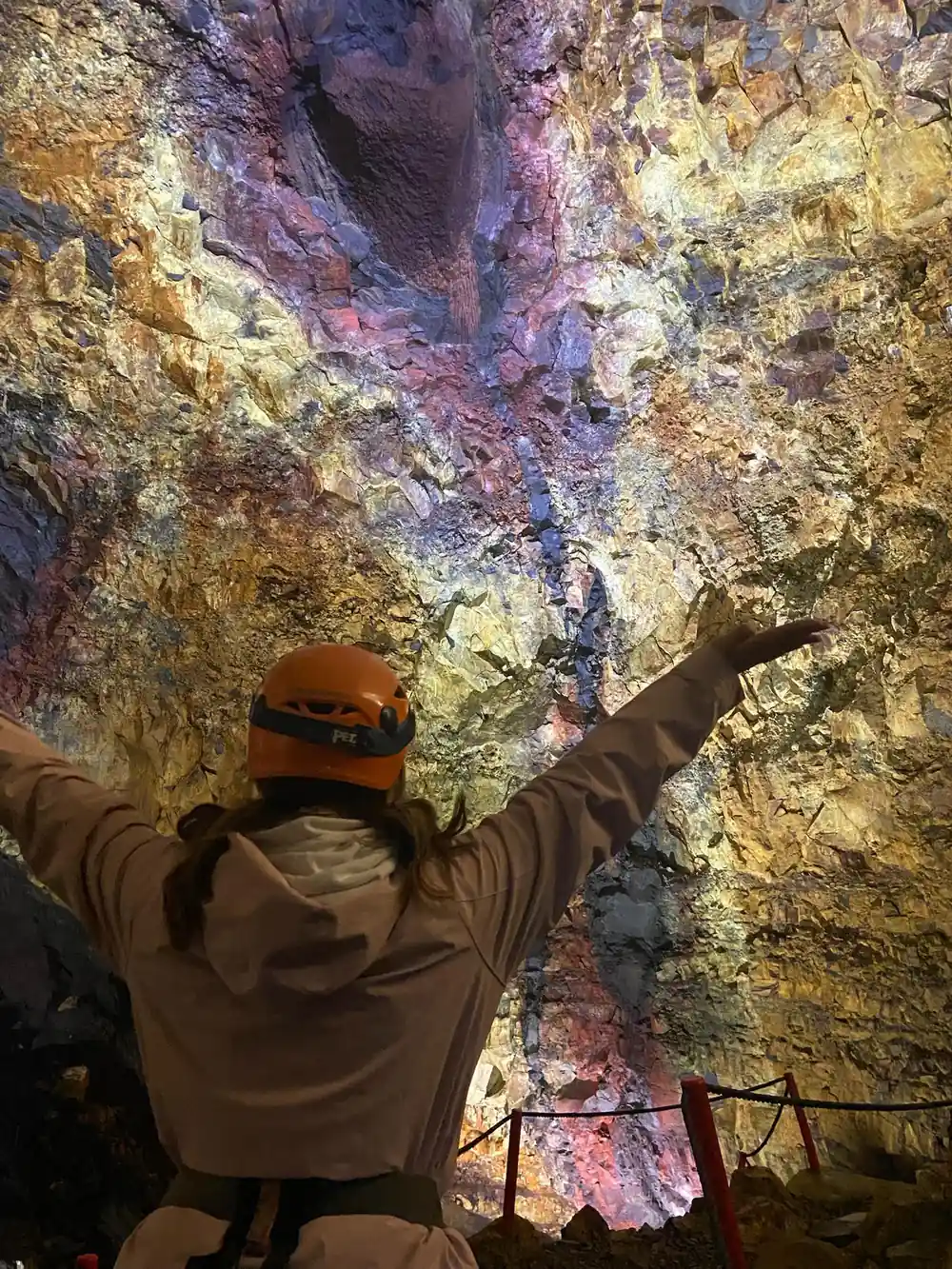
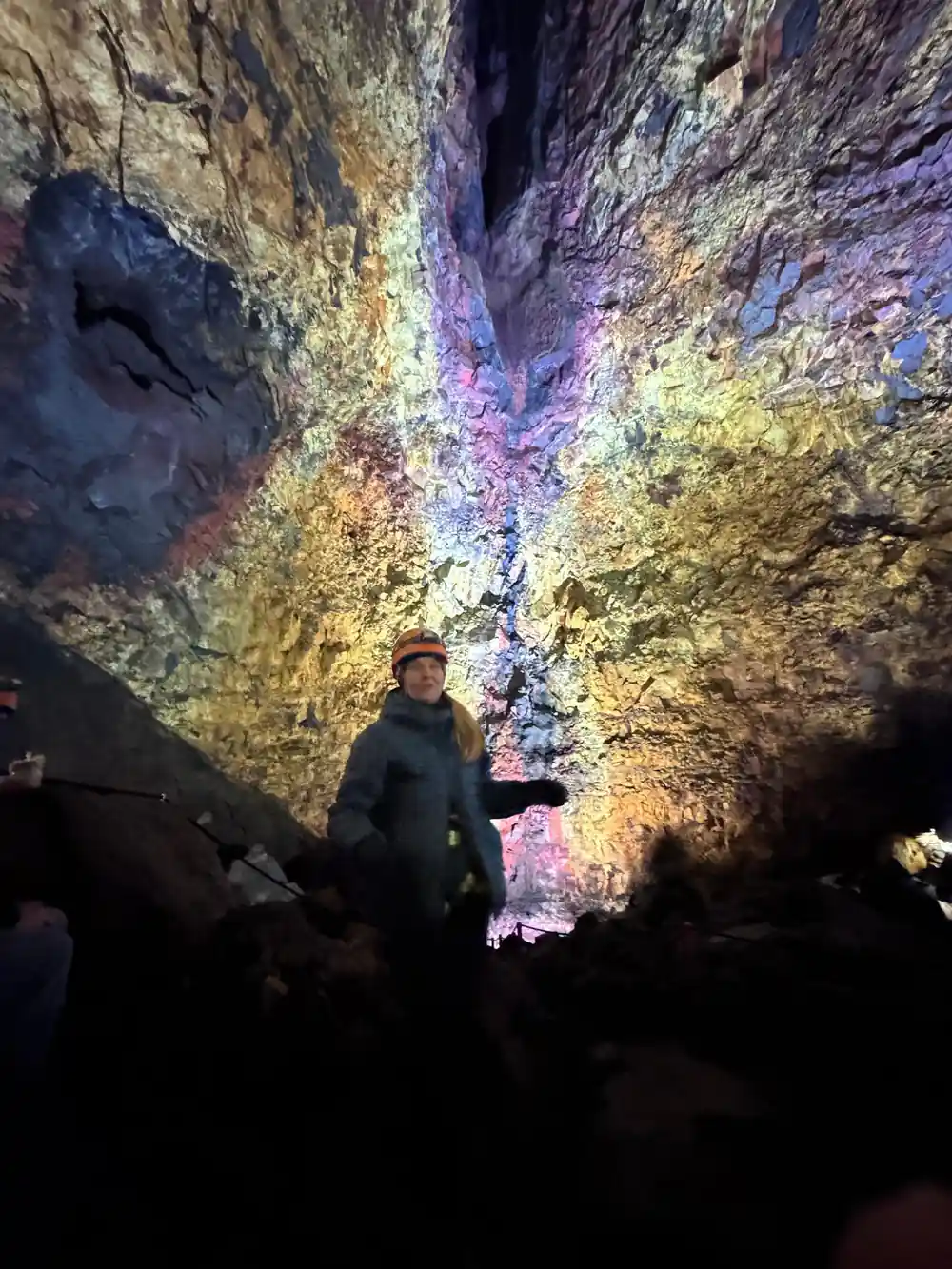
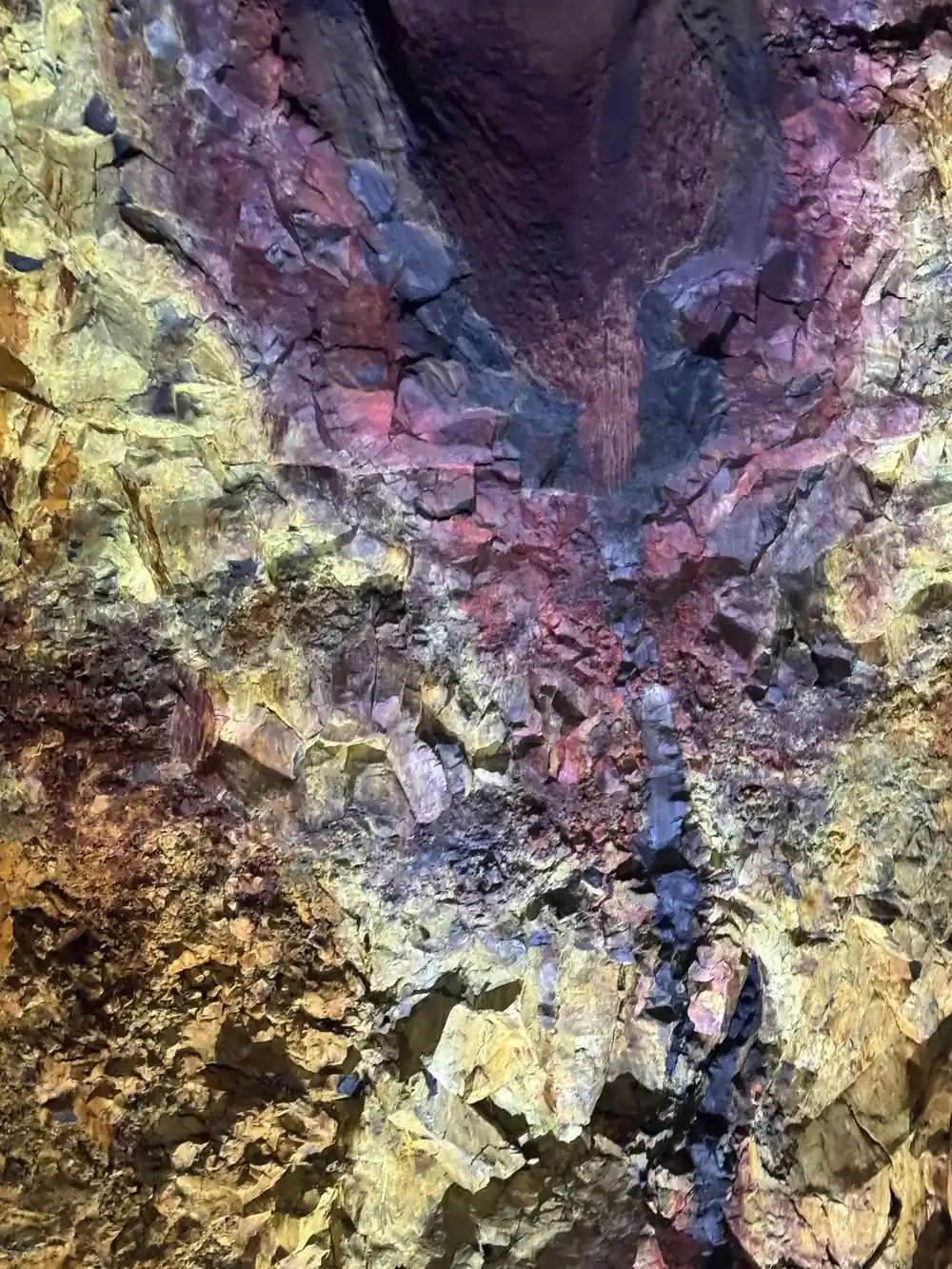
The chamber wall seen from the platform
Ice caves
An ice cave is not volcanic at all. It is a void inside a glacier, usually carved by meltwater running through or under the ice, and its walls are ice rather than rock.
They are spectacular, they are blue in a way photographs do not oversell, and they are fundamentally seasonal and temporary: a glacier moves, and a cave that existed last winter may not exist this one. Reputable operators re-survey them each season for exactly that reason.
They are also mostly a long way from Reykjavik, on the south coast and beyond, which usually means a long driving day or an overnight stay rather than a morning out.
The only thing an ice cave shares with this crater is the word cave and the fact that you go inside something. Geologically and practically they have nothing in common.
And this one
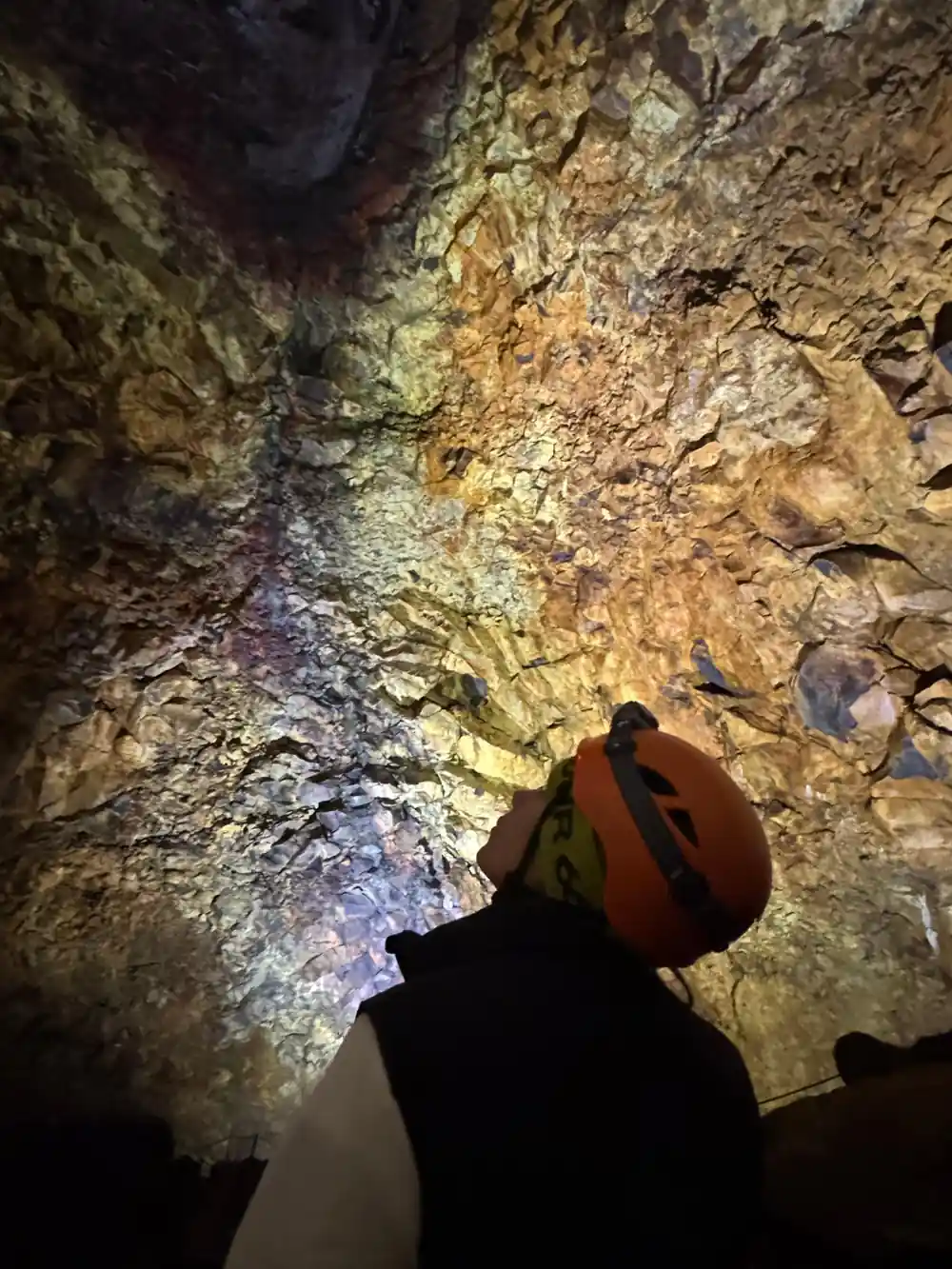
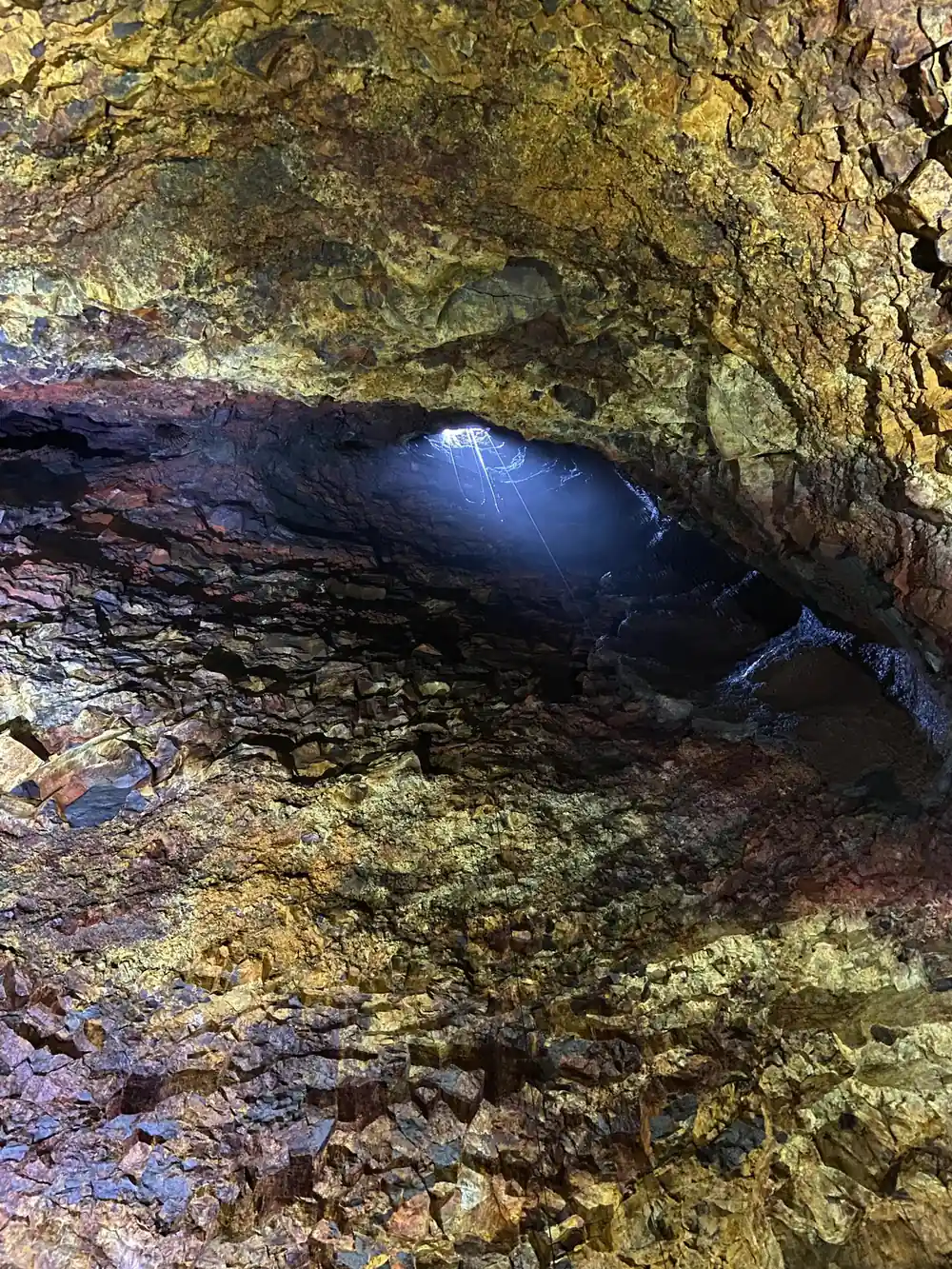
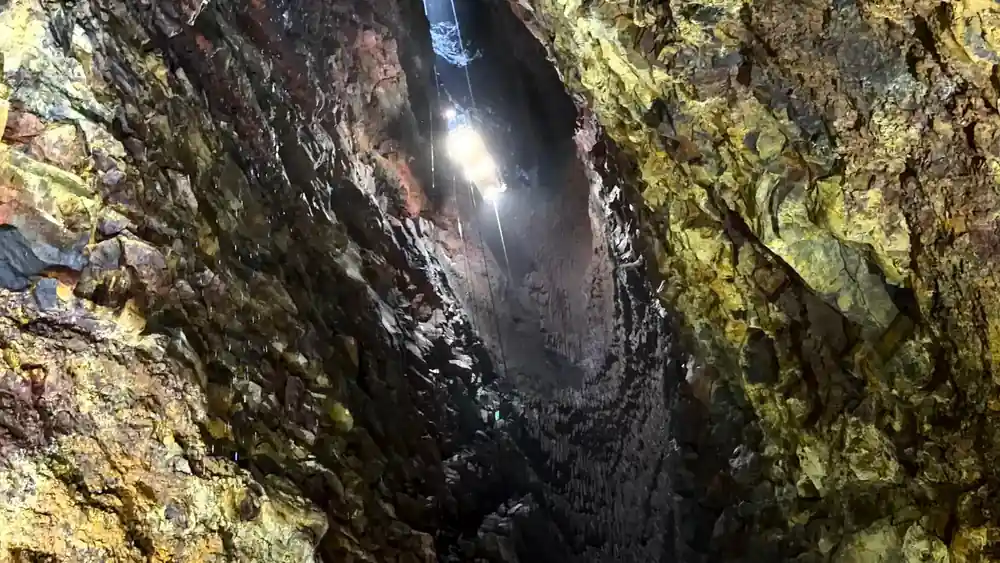
Thrihnukagigur is neither. It is the magma chamber itself: the space in which molten rock was stored beneath the volcano before the eruption, which drained rather than solidifying and left its walls standing.
That distinction is the whole of why the day is arranged the way it is. A tube can be walked into and a glacier cave can be walked into; a chamber is entered vertically through a hole in the crater floor, which is why there is a winch, why parties are five people, and why the throughput is what it is.
It is also why there is exactly one of these open to visitors anywhere. Drained chambers with intact roofs and reachable openings are close to a geological accident, and this is the one with a platform in it.
What about the ones in Reykjavik itself
There are indoor attractions in and around the capital that recreate volcanic and glacial environments, with walk-through installations and film. They are aimed squarely at visitors with an afternoon and bad weather, and some are well made.
They are also, unambiguously, not the same category as anything else on this page. One is a real drained magma chamber and another is a room. Both may be enjoyable and only one of them is a place.
Where they genuinely earn their keep is as a wet-weather fallback or as background before doing the real thing, particularly with children who benefit from seeing a diagram before they see a crater. Used that way they are useful. Used as a substitute they are a disappointment waiting to happen.
Choosing, with limited days
If you have one day and want the rarest thing, this is it, and it will take the whole day.
If you have one day and want to keep most of it, a lava tube near Reykjavik takes a morning and leaves the afternoon intact for something else. It is a perfectly good decision and the more sensible one for a lot of trips.
If you are visiting in winter, this crater is not running at all, and an ice cave or a lava tube are the available options rather than alternatives you are settling for.
And if you want to do more than one, do them in different weeks or at least different days. Two underground days back to back blunts both, and the tube will suffer by comparison in a way it does not deserve.
If this one is ruled out
The walk excludes some people from this trip who would have no difficulty with the underground part, and that is genuinely hard luck rather than a policy anyone enjoys applying.
The good news is that the alternatives are not consolation prizes. A lava tube close to the capital is short, level, reachable by road and far more accessible, and it shows you volcanic rock from the inside with drip features and colour. Several are set up thoughtfully.
The honest summary is that this crater is unique and the others are excellent, and those two statements are compatible.
One is a pipe, one is ice, and one is the chamber
from US$432Reserve now & pay later